
The Shift to Agile Operations: Why Traditional Models Are Failing
Business operations are undergoing a structural transformation. In 2026, many organizations are moving away from rigid, long-term operational planning models toward agile operations that emphasize flexibility, iteration, and rapid response.
Table Of Content
- What Are Traditional Operations Models?
- Key characteristics
- Why Traditional Models Are Breaking Down
- Key drivers of failure include
- 1. Lack of Flexibility in Planning Cycles
- Problems include
- Impact
- 2. Slow Decision-Making Structures
- Issues include
- Operational impact
- 3. Poor Adaptation to Real-Time Data
- Limitations
- Result
- 4. Inefficiency in Handling Disruptions
- Examples of disruptions
- Weakness
- 5. Over-Reliance on Forecasting Accuracy
- Problem
- Impact
- What Is Agile Operations Management?
- Core principles
- 1. Shorter Planning Cycles
- Benefit
- 2. Cross-Functional Teams
- Features
- Operational impact
- 3. Continuous Feedback Loops
- Sources include
- Benefit
- 4. Real-Time Data Integration
- Applications
- Result
- 5. Iterative Execution
- Advantages
- How AI Is Accelerating Agile Operations
- AI supports
- Key Differences: Traditional vs Agile Operations
- Planning
- Decision-making
- Data usage
- Response to change
- Benefits of Agile Operations
- 1. Faster response to change
- 2. Improved efficiency
- 3. Better customer alignment
- 4. Increased innovation
- 5. Greater resilience
- Challenges of Adopting Agile Operations
- 1. Cultural resistance
- 2. Lack of clear processes
- 3. Tooling complexity
- 4. Skill gaps
- 5. Coordination challenges
- How Businesses Are Transitioning to Agile Operations
- 1. Breaking down silos
- 2. Implementing real-time dashboards
- 3. Adopting AI-powered tools
- 4. Shifting to rolling planning models
- 5. Empowering frontline teams
- Industries Leading the Agile Shift
- Technology companies
- Retail and e-commerce
- Logistics and supply chain
- Financial services
- The Future of Agile Operations
- 1. Autonomous operations
- 2. Fully adaptive supply chains
- 3. AI-driven decision ecosystems
- 4. Hyper-personalized operations
- Final Thoughts
Traditional operations frameworks—built for stability, predictable demand, and linear supply chains—are struggling to keep up with today’s environment of constant disruption. Agile operations, by contrast, are designed for change.
This article explores why traditional operational models are failing and how agile operations are reshaping modern business strategy.
What Are Traditional Operations Models?
Traditional operations management relies on structured, predictable planning cycles.
Key characteristics:
- Annual or long-term planning cycles
- Fixed budgets and forecasts
- Hierarchical decision-making
- Standardized processes
- Low-frequency updates to operational plans
These models worked well in stable markets with predictable demand and minimal disruption.
Why Traditional Models Are Breaking Down
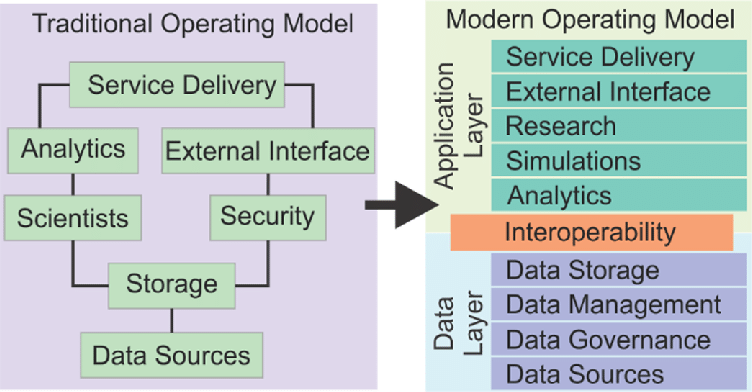
Modern business environments have become too volatile for static systems.
Key drivers of failure include:
- Global supply chain disruptions
- Rapid changes in customer expectations
- Inflation and economic uncertainty
- Technological acceleration
- Real-time competition
- Digital transformation
Traditional models assume stability, but today’s environment is defined by constant change.
1. Lack of Flexibility in Planning Cycles
One of the biggest weaknesses of traditional operations is inflexible planning.
Problems include:
- Plans becoming outdated quickly
- Slow response to market shifts
- Difficulty adapting to disruptions
Impact:
Businesses often continue executing outdated plans even when conditions have changed.
2. Slow Decision-Making Structures
Traditional operations rely on hierarchical approval systems.
Issues include:
- Multiple layers of approval
- Delayed responses to operational issues
- Limited autonomy for frontline teams
Operational impact:
Slow decisions reduce competitiveness in fast-moving markets.
3. Poor Adaptation to Real-Time Data
Traditional models are built around periodic reporting, not continuous data.
Limitations:
- Monthly or quarterly reporting delays
- Lack of real-time visibility
- Delayed reaction to operational issues
Result:
Businesses react too late to emerging problems.
4. Inefficiency in Handling Disruptions
Traditional systems are not designed for unpredictability.
Examples of disruptions:
- Supply chain delays
- Sudden demand spikes
- System outages
- Labor shortages
Weakness:
Rigid processes struggle to adapt quickly, leading to cascading operational failures.
5. Over-Reliance on Forecasting Accuracy
Traditional operations depend heavily on forecasting models.
Problem:
Forecasts become unreliable in volatile environments.
Impact:
- Overstocking or understocking inventory
- Misallocation of resources
- Budget inefficiencies
What Is Agile Operations Management?
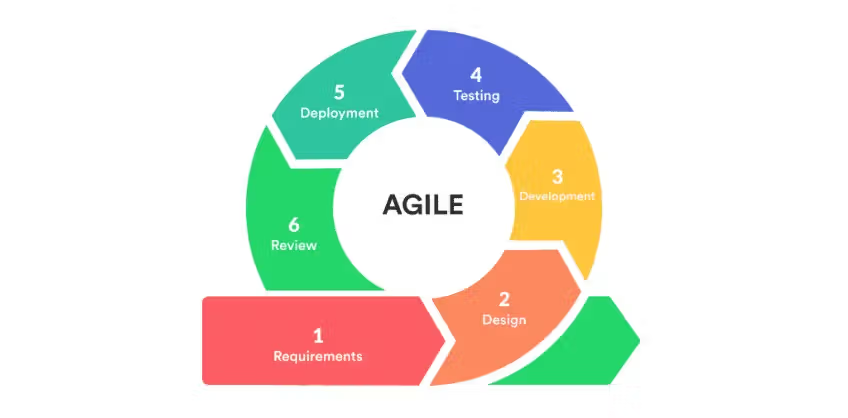
Agile operations focus on flexibility, iteration, and continuous improvement.
Core principles:
- Rapid adaptation to change
- Short planning cycles
- Cross-functional collaboration
- Data-driven decision-making
- Continuous feedback loops
Agile operations are designed for uncertainty rather than stability.
1. Shorter Planning Cycles
Instead of annual plans, agile operations use:
- Weekly planning
- Monthly adjustments
- Rolling forecasts
Benefit:
Faster adaptation to real-world changes.
2. Cross-Functional Teams
Agile operations break down departmental silos.
Features:
- Collaborative teams across functions
- Shared accountability
- Faster communication
Operational impact:
Improved coordination and faster execution.
3. Continuous Feedback Loops
Agile systems rely on constant feedback.
Sources include:
- Customer feedback
- Operational data
- Performance metrics
Benefit:
Continuous improvement replaces static planning.
4. Real-Time Data Integration
Agile operations depend on live data.
Applications:
- Instant performance tracking
- Real-time decision-making
- Predictive analytics
Result:
Faster and more accurate responses to change.
5. Iterative Execution
Work is executed in small, adjustable cycles.
Advantages:
- Reduced risk
- Faster learning
- Continuous refinement
How AI Is Accelerating Agile Operations
Artificial intelligence plays a key role in enabling agility.
AI supports:
- Predictive forecasting
- Automated decision-making
- Real-time optimization
- Workflow automation
AI reduces the time between insight and action.
Key Differences: Traditional vs Agile Operations
Planning
- Traditional: Long-term, fixed
- Agile: Short-term, adaptive
Decision-making
- Traditional: Hierarchical
- Agile: Decentralized
Data usage
- Traditional: Periodic reporting
- Agile: Real-time analytics
Response to change
- Traditional: Slow and reactive
- Agile: Fast and proactive
Benefits of Agile Operations
1. Faster response to change
Organizations can adapt quickly to market shifts.
2. Improved efficiency
Waste is reduced through continuous optimization.
3. Better customer alignment
Feedback is integrated into operations continuously.
4. Increased innovation
Teams experiment and iterate more frequently.
5. Greater resilience
Agile systems handle disruption more effectively.
Challenges of Adopting Agile Operations
1. Cultural resistance
Employees may resist shifting from structured to flexible systems.
2. Lack of clear processes
Too much flexibility can lead to inconsistency.
3. Tooling complexity
Agile operations require integrated digital systems.
4. Skill gaps
Teams need training in agile methodologies and data interpretation.
5. Coordination challenges
Frequent changes require strong communication systems.
How Businesses Are Transitioning to Agile Operations
1. Breaking down silos
Encouraging cross-functional collaboration.
2. Implementing real-time dashboards
Enabling instant visibility into operations.
3. Adopting AI-powered tools
Using automation for forecasting and decision support.
4. Shifting to rolling planning models
Replacing static annual plans with continuous updates.
5. Empowering frontline teams
Allowing faster decision-making at operational levels.
Industries Leading the Agile Shift
Technology companies
Fast iteration cycles and continuous deployment models.
Retail and e-commerce
Real-time inventory and demand responsiveness.
Logistics and supply chain
Dynamic routing and adaptive planning.
Financial services
Rapid risk assessment and automated decision systems.
The Future of Agile Operations
1. Autonomous operations
Systems will self-adjust based on real-time data.
2. Fully adaptive supply chains
Supply networks will continuously reconfigure based on demand.
3. AI-driven decision ecosystems
Most operational decisions will be supported or made by AI.
4. Hyper-personalized operations
Processes will adapt to individual customer behavior in real time.
Final Thoughts
Traditional operations models are struggling to survive in an environment defined by volatility, speed, and complexity. Their reliance on long-term planning, rigid structures, and delayed data makes them increasingly ineffective.
Agile operations offer a more responsive alternative. By emphasizing flexibility, real-time data, and continuous improvement, they enable businesses to adapt quickly and efficiently to change.
In 2026, the shift to agile operations is no longer optional—it is essential for competitiveness. Organizations that embrace agility are better positioned to navigate uncertainty, meet customer expectations, and innovate continuously.
Ultimately, the future of operations is not about predicting change perfectly, but about building systems that can evolve with change as it happens.