
Data-Driven Operations: Why Real-Time Insights Are Now Critical
Data has always been important in business operations, but in 2026 it has become foundational. The difference today is not just the volume of data available, but the speed at which it can be processed and acted upon. Real-time insights are now a critical requirement for operational success, not a competitive advantage.
Table Of Content
- What Are Data-Driven Operations?
- This includes
- Why Real-Time Insights Matter More Than Ever
- Key reasons include
- 1. Faster Decision-Making Across Operations
- Examples
- Operational impact
- 2. Improved Supply Chain Visibility
- Real-time data enables
- Why it matters
- 3. Enhanced Customer Experience
- Real-time systems support
- Operational benefit
- 4. Predictive and Preventive Operations
- Examples
- Impact
- 5. Increased Operational Efficiency
- Benefits include
- 6. Smarter Workforce Management
- Applications include
- Result
- 7. Financial Visibility and Control
- Examples
- Operational impact
- 8. Risk Detection and Management
- Risks detected include
- Benefit
- 9. Automation and AI Depend on Real-Time Data
- AI-driven operations use real-time data for
- Why it matters
- 10. Competitive Advantage Through Speed
- Real-time insights enable
- Outcome
- How Businesses Are Implementing Real-Time Operations
- 1. Live dashboards and control centers
- 2. IoT-enabled systems
- 3. Cloud-based data platforms
- 4. AI-powered analytics
- 5. Event-driven architecture
- Challenges of Real-Time Data-Driven Operations
- 1. Data overload
- 2. Integration complexity
- 3. Data accuracy issues
- 4. Infrastructure costs
- 5. Skill gaps
- Best Practices for Building Data-Driven Operations
- 1. Focus on actionable metrics
- 2. Invest in data infrastructure
- 3. Integrate AI and analytics
- 4. Ensure data quality
- 5. Train teams for data literacy
- The Future of Data-Driven Operations
- 1. Autonomous operations
- 2. Predictive everything
- 3. Unified operational ecosystems
- 4. Hyper-personalization
- Final Thoughts
Modern organizations operate in fast-moving environments shaped by fluctuating demand, global supply chain volatility, customer expectations for instant service, and rapid digital transformation. In this context, delayed data is often as harmful as no data at all.
This article explores why data-driven operations—and especially real-time insights—are now essential for effective operations management.
What Are Data-Driven Operations?
Data-driven operations refer to the use of real-time and historical data to guide decision-making across business processes.
This includes:
- Production planning
- Supply chain management
- Workforce scheduling
- Customer service optimization
- Financial decision-making
- Performance monitoring
Instead of relying on intuition or static reports, organizations use live data to continuously adjust operations.
Why Real-Time Insights Matter More Than Ever

Real-time data has become essential because operational environments are no longer stable or predictable.
Key reasons include:
- Rapid demand fluctuations
- Supply chain disruptions
- Customer expectations for instant service
- Increased competition
- Automation and AI adoption
- Complex global operations
Decisions based on outdated information often lead to inefficiencies, delays, and financial losses.
1. Faster Decision-Making Across Operations
Real-time insights significantly reduce decision latency.
Examples:
- Adjusting inventory levels instantly based on demand spikes
- Redirecting logistics routes during disruptions
- Allocating workforce resources dynamically
- Responding to customer service issues immediately
Operational impact:
Faster decisions lead to smoother workflows and improved responsiveness.
2. Improved Supply Chain Visibility
Supply chains are highly sensitive to delays and disruptions.
Real-time data enables:
- Live shipment tracking
- Supplier performance monitoring
- Immediate detection of bottlenecks
- Predictive delay alerts
Why it matters:
Visibility reduces uncertainty and allows proactive intervention before issues escalate.
3. Enhanced Customer Experience
Customers now expect instant responses and updates.
Real-time systems support:
- Live order tracking
- Instant customer support responses
- Personalized recommendations
- Dynamic service updates
Operational benefit:
Better customer experience leads to higher retention and satisfaction.
4. Predictive and Preventive Operations
Real-time data enables organizations to move from reactive to predictive operations.
Examples:
- Predicting machine failures before breakdowns occur
- Forecasting demand surges in advance
- Identifying operational bottlenecks early
Impact:
Preventing problems is more efficient and cost-effective than fixing them after they occur.
5. Increased Operational Efficiency
Real-time monitoring helps eliminate inefficiencies quickly.
Benefits include:
- Reduced downtime
- Optimized resource usage
- Faster workflow adjustments
- Lower operational waste
Continuous optimization becomes possible at scale.
6. Smarter Workforce Management
Workforce operations benefit significantly from real-time insights.
Applications include:
- Dynamic scheduling
- Performance tracking
- Task reallocation based on demand
- Remote workforce coordination
Result:
Higher productivity and better alignment between workload and staffing.
7. Financial Visibility and Control
Real-time financial data improves operational control.
Examples:
- Live expense tracking
- Revenue monitoring dashboards
- Instant budget variance detection
- Cash flow forecasting updates
Operational impact:
Businesses can respond quickly to financial risks and opportunities.
8. Risk Detection and Management
Real-time systems help identify operational risks early.
Risks detected include:
- Supply chain disruptions
- Cybersecurity threats
- System outages
- Demand volatility
Benefit:
Early detection reduces the severity and impact of risks.
9. Automation and AI Depend on Real-Time Data
Modern automation systems require continuous data input.
AI-driven operations use real-time data for:
- Automated decision-making
- Workflow optimization
- Predictive analytics
- Intelligent alerts
Why it matters:
Without real-time data, automation systems lose accuracy and effectiveness.
10. Competitive Advantage Through Speed
In modern markets, speed is a major differentiator.
Real-time insights enable:
- Faster product adjustments
- Rapid response to market trends
- Immediate customer engagement
- Agile operational shifts
Outcome:
Businesses that act faster consistently outperform slower competitors.
How Businesses Are Implementing Real-Time Operations
1. Live dashboards and control centers
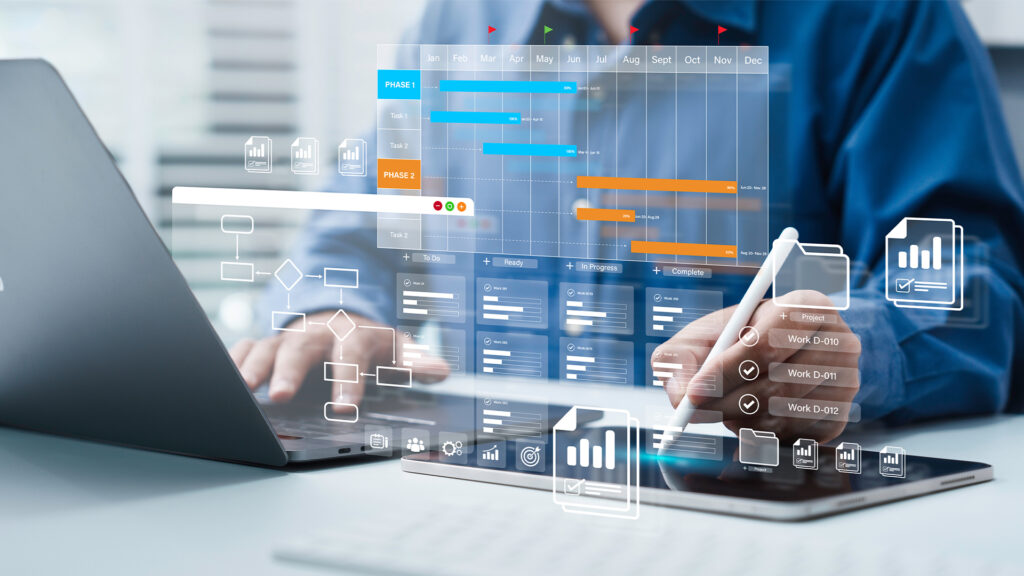
Organizations use centralized dashboards to monitor KPIs in real time.
2. IoT-enabled systems
Sensors provide continuous operational data from equipment and logistics systems.
3. Cloud-based data platforms
Cloud infrastructure enables fast data processing and accessibility.
4. AI-powered analytics
AI systems analyze large datasets instantly and generate actionable insights.
5. Event-driven architecture
Systems respond automatically to changes as they happen.
Challenges of Real-Time Data-Driven Operations
1. Data overload
Too much data can overwhelm decision-makers.
2. Integration complexity
Connecting multiple systems into a real-time ecosystem is difficult.
3. Data accuracy issues
Incorrect or incomplete data can lead to wrong decisions.
4. Infrastructure costs
Real-time systems require significant investment in technology.
5. Skill gaps
Employees need training to interpret and act on live data effectively.
Best Practices for Building Data-Driven Operations
1. Focus on actionable metrics
Not all data is useful—prioritize meaningful KPIs.
2. Invest in data infrastructure
Ensure systems can collect, process, and deliver data in real time.
3. Integrate AI and analytics
Use AI to convert raw data into insights.
4. Ensure data quality
Clean, accurate data is essential for reliable decisions.
5. Train teams for data literacy
Employees must understand how to interpret real-time insights.
The Future of Data-Driven Operations
1. Autonomous operations
Systems will increasingly make decisions without human intervention.
2. Predictive everything
From demand to maintenance, prediction will become standard.
3. Unified operational ecosystems
All business functions will operate on connected real-time data platforms.
4. Hyper-personalization
Operations will adapt dynamically to individual customer behavior.
Final Thoughts
Data-driven operations have become the backbone of modern business strategy. In 2026, real-time insights are no longer optional—they are essential for staying competitive in fast-changing environments.
Organizations that can collect, process, and act on real-time data gain significant advantages in speed, efficiency, and decision-making quality. They are better equipped to handle disruptions, meet customer expectations, and optimize performance continuously.
However, success depends not just on having data, but on having the right systems, skills, and processes to turn that data into action.
Ultimately, real-time insights are transforming operations from reactive systems into intelligent, adaptive ecosystems capable of responding instantly to the world around them.