
Lean Operations Management: Principles That Still Work in 2026
Lean operations management has been around for decades, yet it remains one of the most effective frameworks for improving efficiency, reducing waste, and increasing value in modern organizations. Even in 2026—an era dominated by automation, artificial intelligence, and data-driven decision-making—lean principles continue to shape how successful companies operate.
Table Of Content
- What Is Lean Operations Management?
- The 5 Core Lean Principles
- 1. Define Value from the Customer’s Perspective
- Key idea
- Examples of customer value
- Why it still works in 2026
- 2. Map the Value Stream
- This includes
- Purpose
- Common waste identified
- 3. Create Flow
- Key goals
- In 2026
- 4. Establish Pull Systems
- Benefits
- Modern application
- 5. Pursue Continuous Improvement (Kaizen)
- Key practices
- Why it remains critical
- The 8 Types of Waste (Muda)
- 1. Overproduction
- 2. Waiting
- 3. Transport
- 4. Overprocessing
- 5. Inventory
- 6. Motion
- 7. Defects
- 8. Underutilized Talent
- How Lean Has Evolved in 2026
- 1. AI-Powered Process Optimization
- Examples
- 2. Real-Time Data Visibility
- Benefits
- 3. Hyper-Automation
- Includes
- 4. Digital Value Stream Mapping
- 5. Remote and Distributed Lean Teams
- Challenges addressed
- Benefits of Lean Operations in Modern Businesses
- 1. Increased Efficiency
- 2. Lower Operational Costs
- 3. Faster Delivery
- 4. Higher Quality Output
- 5. Better Employee Engagement
- Common Challenges in Applying Lean Today
- 1. Resistance to Change
- 2. Over-Reliance on Tools
- 3. Lack of Training
- 4. Misinterpretation of “Efficiency”
- Lean in Different Industries
- Manufacturing
- Software Development
- Healthcare
- Logistics
- Digital Businesses
- How to Implement Lean in 2026
- 1. Start with process mapping
- 2. Identify waste
- 3. Introduce automation selectively
- 4. Empower teams
- 5. Measure continuously
- Final Thoughts
What makes lean so enduring is its simplicity: focus on what adds value, eliminate what doesn’t, and continuously improve. While tools and technologies evolve, these core ideas remain highly relevant across industries.
This article explores the lean principles that still work today, how they’ve evolved with modern technology, and how organizations can apply them effectively in 2026.
What Is Lean Operations Management?
Lean operations management is a systematic approach to improving efficiency by minimizing waste while maximizing customer value.
Originally developed in manufacturing environments, lean has now expanded into:
- Software development
- Healthcare systems
- Logistics and supply chain
- Service industries
- Digital product teams
At its core, lean is about doing more with less—without sacrificing quality.
The 5 Core Lean Principles
Despite technological advancements, the original lean principles remain unchanged and highly relevant.
1. Define Value from the Customer’s Perspective

Lean starts with understanding what the customer actually values—not what the organization assumes is valuable.
Key idea:
Anything that does not directly contribute to customer value is considered waste.
Examples of customer value:
- Faster delivery times
- Higher product quality
- Better user experience
- Lower cost
- Reliable service
Why it still works in 2026:
AI tools now help analyze customer behavior at scale, making it easier to define value with precision—but the principle itself remains human-centered.
2. Map the Value Stream
Value stream mapping identifies all the steps required to deliver a product or service.
This includes:
- Production steps
- Information flow
- Approval processes
- Delivery mechanisms
Purpose:
To identify which steps add value and which do not.
Common waste identified:
- Unnecessary approvals
- Redundant communication
- Excess inventory
- Idle time
- Rework loops
Modern organizations use digital process mining tools to map value streams in real time.
3. Create Flow
Once waste is removed, the next step is ensuring smooth workflow without interruptions.
Key goals:
- Eliminate bottlenecks
- Reduce delays between steps
- Improve coordination between teams
- Streamline processes
In 2026:
Automation and AI-driven workflow systems help maintain continuous flow by routing tasks intelligently and reducing manual handoffs.
4. Establish Pull Systems
A pull system ensures that work is only done when there is demand, rather than pushing excess output through the system.
Benefits:
- Reduces overproduction
- Minimizes inventory waste
- Improves responsiveness
- Aligns production with actual demand
Modern application:
In digital environments, pull systems are seen in:
- Just-in-time manufacturing
- Agile software development
- On-demand service delivery
- Cloud resource scaling
AI forecasting tools now enhance demand prediction, making pull systems even more accurate.
5. Pursue Continuous Improvement (Kaizen)
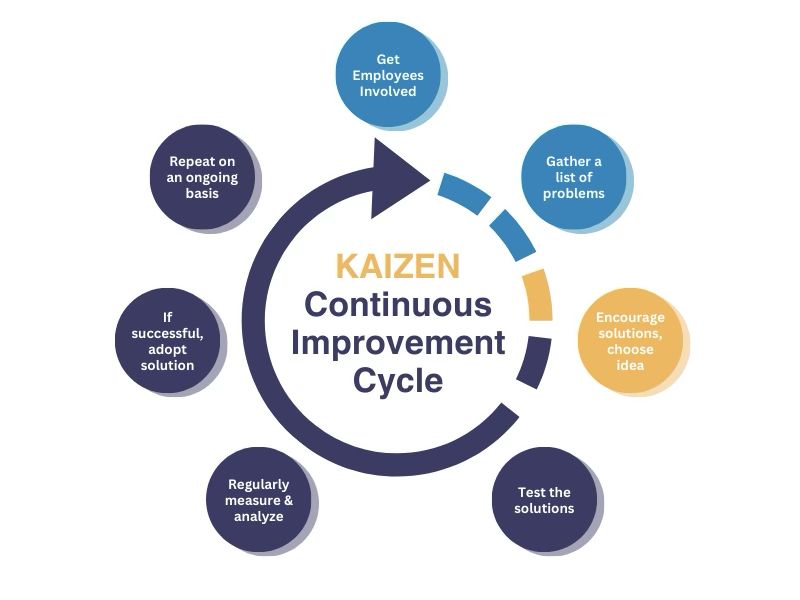
Continuous improvement, or Kaizen, is the ongoing effort to improve processes incrementally over time.
Key practices:
- Regular performance reviews
- Employee feedback loops
- Small iterative improvements
- Data-driven optimization
Why it remains critical:
Even with automation, systems degrade or become outdated. Continuous improvement ensures long-term efficiency.
The 8 Types of Waste (Muda)
Lean identifies specific types of waste that reduce efficiency.
1. Overproduction
Producing more than needed.
2. Waiting
Idle time between processes.
3. Transport
Unnecessary movement of materials or data.
4. Overprocessing
Doing more work than required.
5. Inventory
Excess stock or unused work-in-progress.
6. Motion
Unnecessary movement of people or equipment.
7. Defects
Errors requiring rework or correction.
8. Underutilized Talent
Failing to use employee skills effectively.
How Lean Has Evolved in 2026
While the principles remain stable, their implementation has evolved significantly.
1. AI-Powered Process Optimization
AI systems now help identify inefficiencies in real time.
Examples:
- Predicting bottlenecks before they occur
- Automating workflow adjustments
- Detecting waste patterns in operations
2. Real-Time Data Visibility
Modern dashboards provide instant insights into operational performance.
Benefits:
- Faster decision-making
- Continuous monitoring
- Immediate feedback loops
3. Hyper-Automation
Lean systems now integrate automation across multiple layers.
Includes:
- Robotic process automation (RPA)
- AI-driven task routing
- Smart inventory systems
4. Digital Value Stream Mapping
Instead of static diagrams, companies now use dynamic process models that update in real time.
5. Remote and Distributed Lean Teams
Lean is no longer limited to physical factories or offices.
Challenges addressed:
- Communication delays
- Distributed workflows
- Digital collaboration inefficiencies
Benefits of Lean Operations in Modern Businesses
1. Increased Efficiency
Lean reduces wasted time, effort, and resources.
2. Lower Operational Costs
Eliminating inefficiencies directly reduces costs.
3. Faster Delivery
Streamlined workflows improve speed to market.
4. Higher Quality Output
Reducing defects and rework improves product quality.
5. Better Employee Engagement
Employees focus on meaningful work instead of repetitive tasks.
Common Challenges in Applying Lean Today
1. Resistance to Change
Employees may resist process restructuring or automation.
2. Over-Reliance on Tools
Technology alone cannot replace lean thinking.
3. Lack of Training
Without proper understanding, lean initiatives fail.
4. Misinterpretation of “Efficiency”
Focusing only on speed can reduce quality or innovation.
Lean in Different Industries

Manufacturing
Focus on production efficiency, waste reduction, and quality control.
Software Development
Lean principles are applied through:
- Agile workflows
- Continuous integration
- Iterative development
Healthcare
Used to reduce patient wait times and improve care delivery.
Logistics
Optimizes supply chains and delivery systems.
Digital Businesses
Improves user experience, product iteration, and operational workflows.
How to Implement Lean in 2026
1. Start with process mapping
Understand how work currently flows.
2. Identify waste
Focus on inefficiencies before adding new tools.
3. Introduce automation selectively
Use AI to support—not replace—lean processes.
4. Empower teams
Encourage employees to suggest improvements.
5. Measure continuously
Use KPIs to track performance improvements.
Final Thoughts
Lean operations management remains one of the most powerful frameworks for improving efficiency and delivering value. Despite rapid technological advancements, its core principles—value, flow, pull, and continuous improvement—are still highly relevant in 2026.
What has changed is not the philosophy, but the tools used to apply it. AI, automation, and real-time analytics have amplified lean’s effectiveness, making it more precise, scalable, and data-driven than ever before.
Organizations that successfully combine lean thinking with modern technology are better positioned to reduce waste, improve performance, and stay competitive in an increasingly complex business environment.
In the end, lean is not about doing more with less technology—it is about doing more of what matters with less waste, and that principle will remain timeless.